What Would Jesus Do?
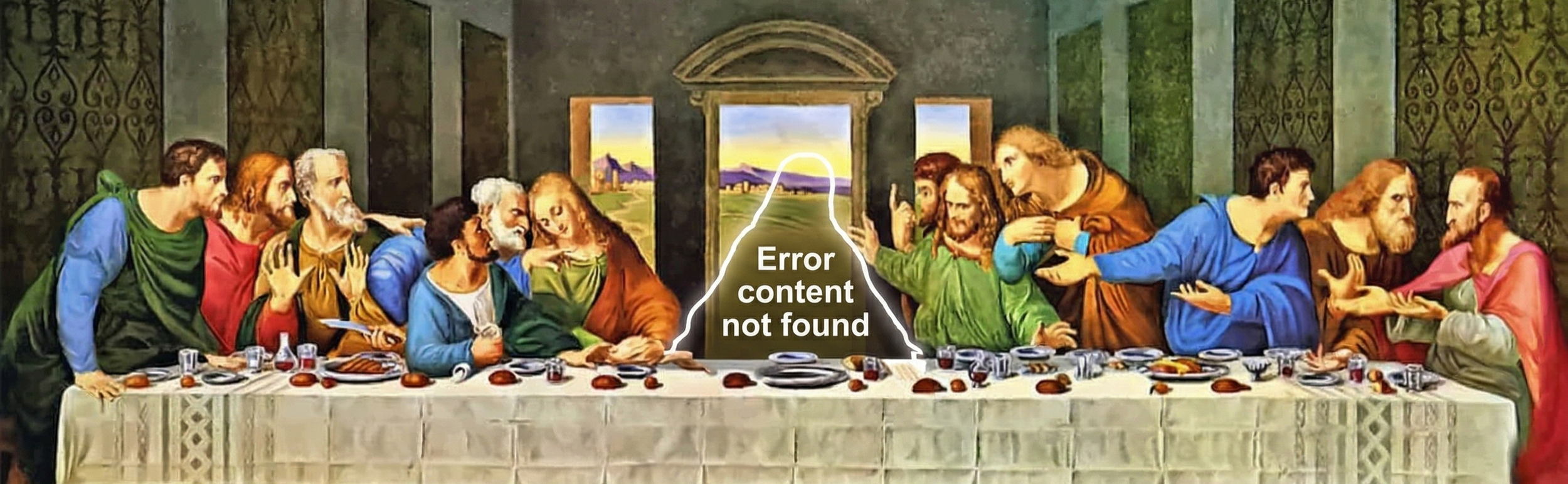
When I began this series of essays, my goal was to examine what I perceived to be a loss of virtue among the American body politic. Rather than merely offering reflections and commentary on current events, I wanted to advance the proposition that we could, through collective effort as a nation, repair the fractures in our national virtue.
Having said that, I was recently drawn to an article about Senate candidate James Talarico. Talarico is an American politician who considers himself a Progressive Christian. He is a Presbyterian seminarian, former public school teacher, and member of the Texas House of Representatives. He is the Democratic nominee for U.S. Senate in 2026 and has been called a rising star among Texan Democrats.

Recently, in an interview with the New York Times, Talarico was quoted:
“Jesus liberates. Christian nationalism controls. Jesus saves. Christian nationalism kills. Jesus started a universal movement based on mutual love. Christian nationalism is a sectarian movement based on mutual hate.”
In another interview, he criticized the evangelical focus on abortion and homosexuality in politics:
“It’s remarkable to me that you have an entire political movement using Christianity to prioritize two issues that Jesus never talked about… And I’m not saying they’re not important—I actually think both of those issues are very important. But to focus on those two things instead of feeding the hungry and healing the sick and welcoming the stranger—three things we’re told to do ad nauseum in Scripture—to me, is just mind blowing.”
After mulling his words over, I began to think that maybe, just maybe… he might be onto something.
I was raised in the Catholic faith. My father was a Chicago native and lived most of his life as an active, though not devout, Catholic. My mother was born in Belgium and married my father, then an American soldier, before emigrating with him to the United States at the end of the Second World War. My mother’s father was an active Socialist politician and because the Catholic nuns in her school treated her so badly due to her father’s politics, she came to hate the Catholic Church as an adult. We weren’t “raised” Catholic but we were raised to treat others the way we wanted to be treated. We were raised to be good people and care about others. More importantly, I watched my parents model that behavior. They weren’t perfect but they were good, decent people who, I suppose without knowing it, lived their lives as members of a community of people who mostly did the same. They cared about other people and had little use for bullies or those who ignored others who suffered or fell on hard times. My mother was in school food service and, on more than one occasion, I watched her give away food to employees who struggled. I watched my father do the same, never hesitating to help a neighbor who needed it.
For as long as I can remember, it’s been easy to blame our political leaders and institutions of government for the fracturing of our national virtue. Comments like “why can’t they do something about that?” or “there oughta be a law” or “they’re all crooked” can be heard in coffee shops and taverns across the land. But… maybe it’s not about “they.” Maybe it’s about us. Perhaps repairing the fracture of our national virtue begins with each of us, with you and me, in our daily lives. I believe there is need for all of us to recognize that the idea of national virtue is not an abstract; that the virtue of a nation is rooted in the virtue of its individual citizens.
In so many of our national conversations, we face issues that may be difficult to understand. Whether the debate or disagreement turns on issues of immigration, gender identity, the economy, our role in the world; or even personal choices about how some choose to live their lives or whom they choose to love, polarization characterizes the conversation. Me against you, us against them and the center seems unable to hold. As I examined all of this and discussed it with my college government students, I learned from one of them something I had not considered before. One of them offered the comment, “why does everyone have to judge everyone else?” As a result, I began to ask myself the same question. How often do I judge before I even try to understand? Why do I judge at all? Is it that difficult to “live and let live.” What would Jesus do?

It was in this same spirit that Abraham Lincoln admonished Americans to heal after the divisive Civil War, *"We are not enemies, but friends. We must not be enemies... The mystic chords of memory, stretching from every battlefield and patriot grave... will yet swell the chorus of the Union, when again touched, as surely they will be, by the better angels of our nature." * The national virtue must emerge from the better angels of each of our natures. We each have the opportunity and the ability to change the way we conduct our lives as individuals and as citizens of our republic. We can resolve not to judge, but to first try to understand and empathize. Understanding and empathy may ultimately not lead to agreement, but it can move us all to the center of the debate. We also may find that much of what we argue about does not even affect our own daily lives.
Anyone who has traveled across this country as I have, will quickly realize that we are an enormous nation, incredibly diverse, brimming with kind and generous people. Despite our many failings and shortcomings over our long 250 years, we have continued to move toward becoming, in the words of our Framers, a more perfect union. And, there is no denying that America has freed and fed more people than any other nation on the planet.
In his 1896 novel In His Steps, Charles Sheldon poses the thought, what would Jesus do? He encouraged all of us to focus on acting with love, humility, and compassion in daily life, often in response to injustices or poverty. Virtue, I believe, remains rooted in our DNA but as of late, seems to have become dormant. Our national virtue has been severely damaged over the last ten years but I believe it is not yet beyond repair. It will be up of each of us to reconsider how we conduct our own lives; how we interact with our fellow citizens, how we think about the national debates, and most of all, how we consider the issues that inflame our passions and how we can choose understanding and empathy over judgement. Perhaps if each of us could look first to the words of Jesus and consider what he would do rather than taking our cues from cable news, we might find out way back to the sanity of virtue. The collective virtue of our nation is fractured but it is not yet fully broken. We can repair the breach if we set our minds and hearts to the task. If we do, to paraphrase Hemingway, we can and will be stronger at the fractured places.
Let The Conversation Begin