Hope Lives In The Heartland
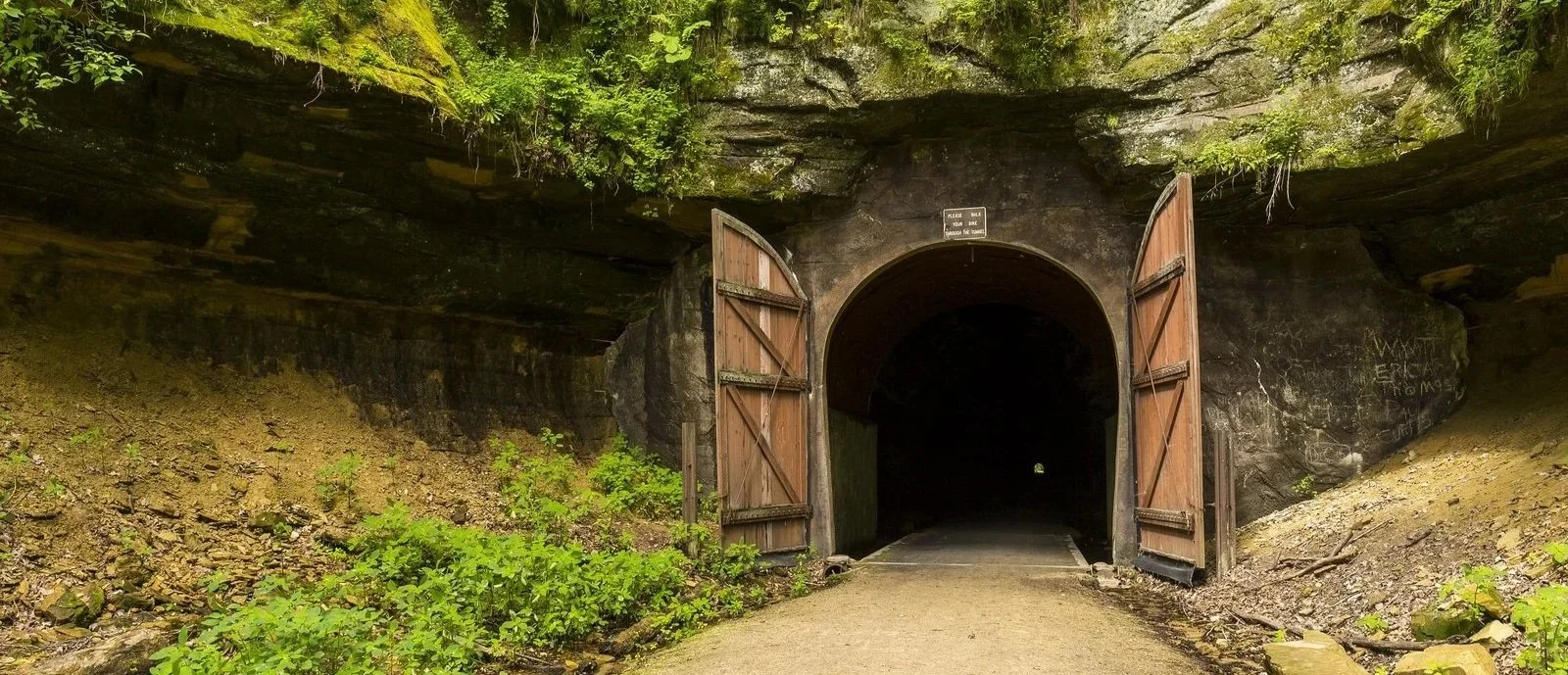
Since my first essay on the subject of virtue was, some might say, a bit wonky, I thought I might divert from my original essay plan a bit and spend some time and reflection on a somewhat lighter subject and one which involved a recent personal experience. As the storm clouds of our emerging autocracy continue to gather, my wife and I decided to break away from the relentless barrage of doom and gloom that is modern television news and retreat to a well-known bicycle trail in central west Wisconsin. The Elroy-Sparta Trail is a 32 mile, mostly flat terrain that offers the rider a winding path through some of the most scenic vistas in the American Midwest. We weren’t disappointed. Using our phones only to mark time and distance, we set off on an early autumn afternoon and since we set out a bit later than planned, we decided to ride only half the entire trail setting our destination to a small town some 18 miles south.
Part of the joy of cycling is that with the first turn of the pedals, the wind, the sound of the gears, and the feeling of self-propulsion, at least for me, instantly clears the mind allowing other thoughts, sentiments, and inspirations to creep in. As a writer, cycling is often the source of my best ideas. Coupled to any beautiful landscape, it can become something much more than a bike ride. On this particular ride though, in the warmth and beauty of the early afternoon autumn sun, I couldn’t help but think about the people who lived along the trail, their lives, and how all the current political and cultural disturbance was affecting them and their day to day existence. With everyday goods and services becoming increasingly expensive, governments shutting down, and the political class driving an ever deepening wedge between Americans, I wondered if they were worried that things might even get worse. How were they doing, the farmers moving their cattle, the shop keepers, the city workers, the teachers, and the local merchants? How were their lives and futures being changed? What were they feeling right now? Did they even care anymore or had their cynicism finally overwhelmed their optimism? Could Washington D.C. be any farther away? Was there any hope left in the heartland?
At the turnaround point of our 18 mile ride, we decided to take a break at a local watering hole in a small Wisconsin town, population 533. There was only one tavern so the decision was easy. I poked my head in the door to determine if it seemed friendly and since it did, we decided to take a seat at the bar. It was everything you might expect from a small town tavern in the later afternoon. There was a woman to our left who looked like she just got off work. There was the older guy in the corner who looked like he’d been there a while. Every tavern seems to have one of those. To my right sat a cluster of folks who seemed to know each other pretty well. The older woman of the group had her beer and cigarettes at the ready and seemed to be somehow in charge because, much to the annoyance of the young bartender, she kept “helping” her do her job. This small group was talking over the events of the day and I couldn’t help but think that this could be any tavern in any towns big or small. This was life at the end of a typical day filled with work and challenges and family and friends. It was a day much like what the songwriter Harry Chapin once noted, “an any old kind of day.”
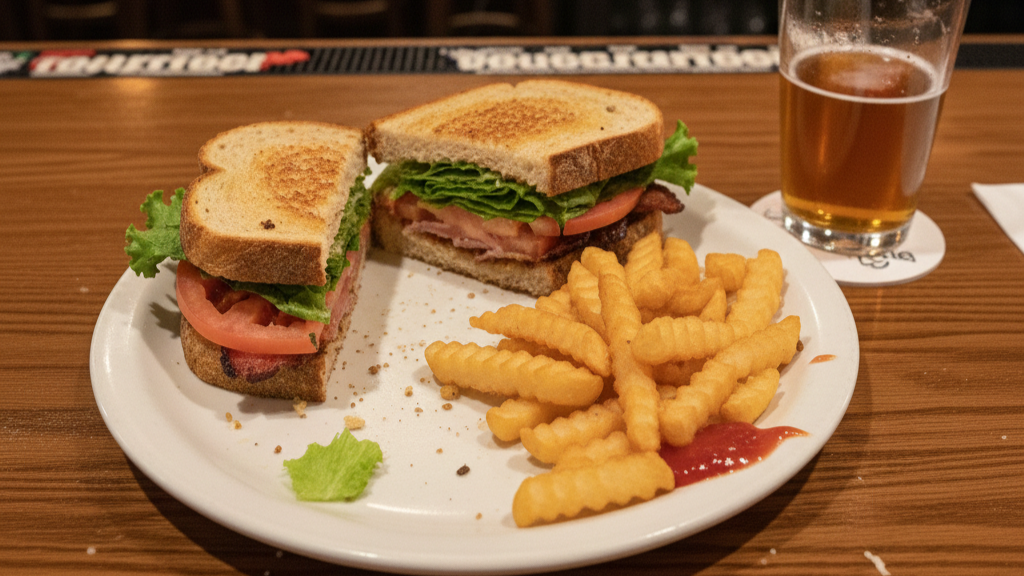
Looking over the menu, I ordered a bacon, lettuce, and tomato sandwich priced remarkably, at $7.95. When the cook appeared, I noted to him that the same sandwich would cost $15 in Chicago to which he remarked, “No way anyone around her pays that much.” All the other items on the menu were similarly priced. We sat for a while, enjoyed our food and drink, and just watched and listened. Again, it was the kind of place and the sort of conversation you might in Anytown, USA. Folks talking about work, the farm, family and everyday sorts of things. These were workin’ folks who earned their living with their hands and showered at the end not the beginning of their day. They knew what was important and you best not attempt to bullshit or talk down to them because they’d call you out. So, in my most respectful voice, I finally worked up the courage to ask the bartender a question. She was a younger woman maybe in her late 20s, and she seemed a bit out of place in this small town bar full of folks at least twice her age. When she returned with our drinks, I said,
“How’s business? This is the only tavern in town right?”
“It is,” she said, “And it’ll get very busy soon when most folks get off work.”
Then I said, “Can I ask you some questions?”
“Sure,” she said.
“Ok, thank you. So I teach college classes in civics and world history and I was wondering, given all the politics stuff going on right now, what’s the mood in this town? What are people talking about?”
She thought for a minute, then looked both ways as if she wanted to be careful who heard what she was about to say. Then she said,
“Well… I don’t say much because ya know, most around here don’t want to hear what I have to say. You couldn’t tell them anything during the last election but I will tell you something. That had all the answers and were absolutely certain about their voting choice.
Then she leaned forward over the bar at me with big eyes and said,
“Truthfully though… they all get it, they all get it now.”
Neither one of us mentioned a name or political party but we both knew who she was talking about. Then I mentioned that I noticed that absence of Trump signs compared to the last time I was this far north.
“Yeah I know,”* she said, “Like I said, they get it now.”
I couldn’t help but take away from that conversation that these folks, mostly workers and farmers, everyday Americans, were likely less than happy with the current state of American politics and specifically a president who many of them, even most of them, faithfully elected to a second term.
This was the heartland of the country and my short conversation told me that in the words of my favorite old band, Buffalo Springfield, “there’s somethin’ happening here.” Like in the song, what exactly is happening is hard to say because after all, our short time in the only tavern in the town was not exactly a scientific poll. But as we rode away, I felt better somehow that maybe all wasn’t lost. Maybe Americans would, in the end, do as Winston Churchill is alleged to have once sarcastically mused, “Americans can always be trusted to do the right thing, once all other possibilities have been exhausted.” Maybe this experiment of ours, this crazy patchwork quilt of people and places with all its problems, challenges, and anomalies will stay true to the path toward a more perfect union. Maybe we can still as Lincoln said, “be touched by the better angels of our nature.” America is full of good and kind people, people who understand the difference between right and wrong, who care about their neighbors, who are willing to stand up to tyranny. Maybe something really is happening here. Maybe, just maybe, there was hope and that hope will spread. On one autumn day in our brief encounter with some small town folks in Wisconsin, I learned… at least for right now, hope still lives in the heartland.
Let The Conversation Begin