We Sure Used To Be
In the classic episode of Aaron Sorkin’s landmark television show, The Newsroom, Will McAvoy, played by Jeff Daniels, is cast as the newscaster guest who has been invited to a local college to join a three person discussion panel on American politics. During the question and answer session, a sophomore student asks the panel to offer their thoughts on “what makes America the greatest country in the world.” The two other members of the panel offer predictable answers such as “diversity and opportunity” and “freedom and freedom.” Will has a reputation for his unwillingness to make political statements or do anything that might be viewed as controversial. When pressed, he mimics the answers of the first two and kiddingly adds “the New York Jets.”
After cajoling from the moderator about his avoidance, he proceeds to deliver a legendary rant as to why America is not the greatest country in the world. His response includes a laundry list of how other countries are doing better in a variety of statistical measures. He concludes his list by declaring, “America is not the greatest country in the world.” The audience and moderator are stunned. But, after what seems like a long silence, he adds:
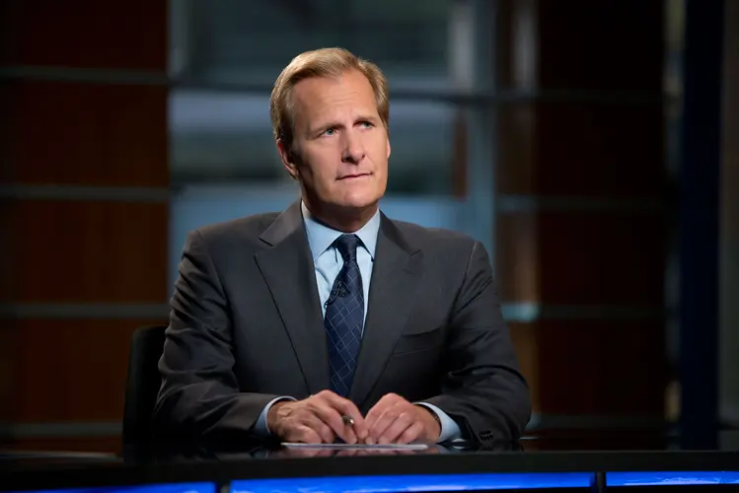
“We sure used to be. We stood up for what was right. We fought for moral reasons, we passed and struck down laws for moral reasons. We waged wars on poverty, not poor people. We sacrificed, we cared about our neighbors, we put our money where our mouths were, and we never beat our chest. We built great big things, made ungodly technological advances, explored the universe, cured diseases, and cultivated the world's greatest artists and the world's greatest economy. We reached for the stars, and we acted like men. We aspired to intelligence; we didn't belittle it; it didn't make us feel inferior. We didn't identify ourselves by who we voted for in the last election, and we didn't scare so easy. We were able to be all these things and do all these things because we were informed. By great men, men who were revered. The first step in solving any problem is recognizing there is one—America is not the greatest country in the world anymore.”
With that thought in mind and in ongoing conversations with friends, neighbors, and family, I recently attempted to explore how we’ve arrived at this hyper-polarized place in our body politic and what everyday folks thought about what I have been calling the fracturing of our national virtue. One of those conversations recently took place at a local rock band concert. Not long after sitting down at a picnic table, I struck up a conversation with a man sitting across from me. The band was surprisingly good, offering a repertoire mostly from the 70’s and 80’s. It was friendly and comfortable, and it led us both to tell stories from those years as we reminisced about the power and emotion of the music from back in the day. We both pondered whether today’s music would enjoy a similar lifespan. We both agreed that we, and many others, were enjoying “our” music fifty plus years later and it made us feel good as we both faced the onslaught of older age. The music, the warm summer night, and some very cold beer, made for a lovely evening.

After a few more conversational niceties, I decided to ask him a question but before doing so, I added that across the span from the late 60s to the late 80’s, much of the music was almost emblematic of a general discontent with the politics and culture norms of the day especially among young people. Even if the music wasn’t overtly or deliberately political, all of it seemed at least to serve as a running commentary about the cultural state of things and it wouldn’t allow us to look away or tune it out. At least that’s how I remember it. So, then I asked him,
“Back then,” I asked, “the music seemed to be emblematic of the national mood. The band Buffalo Springfield wrote ‘For What It’s Worth,’ and that song became the anthem of a generation. The “something” mentioned in the lyrics, however we defined it at the time, seemed omnipresent in the national conversation. It became a sort of touchstone for so many who wanted change or at least believed we were going down a very bad road. I reminded him of even one later example from 1989, Don Henley and Bruce Hornsby’s song, “The End of the Innocence.”
O’ beautiful, for spacious skies
Now those skies are threatening
They’re beating plowshares into swords
For this tired old man that we elected king.
Armchair warriors often fail
And we’ve been poisoned by these fairy tales
After sharing that, I continued my question, “Bob, you seem like an informed student of music history. With all the current turmoil in our body politic today, where is the music? Why don’t we hear more music that speaks out against so much of what is happening today? Where are all the artists? Where are the Bob Dylans, the Stephen Stills, the Joan Baezes, the Joni Mitchells, and the Don Henleys? It seems worse now than it was back in our day and yet there seems to be an unsettling absence of artists speaking and singing out.”
He shook his head and said he didn’t know. Then he took a long drink of his beer and said, “I don’t know, Jeff. I don’t know if our country is going to make it. I’m not sure we can survive all this.”
His response startled me. I have been a government/history professor and nerd for some fifty years and that was the first time, in fact the only time, I ever heard anyone say anything so politically dark. It seemed that he, like perhaps more Americans, had given up. During the Czarist period in Russia, a popular saying among the common people that spoke to the loss of hope for any meaningful change was, “We’ll never get to heaven and the Czar’s too far away.” Bob’s reaction to my question provoked two of my own internal questions. If our national virtue has suffered a fracture, and I firmly believe it has, then how deep is the wound and can it ultimately be repaired and healed? How do we face the reality of a recent PBS News/NPR/Marist Poll that confirms, just prior to our 250th national birthday, that 83% of U.S. adults believe America has moved away from its foundational principles and of that group, nearly half (47%) feel the country has "moved far away." The ancient Greek historian Polybius described a perpetual state of chaos and confusion in government as “anacyclosis” and cited it as a sign of eventual decay of the body politic. That condition seems more and more to reflect our current national condition.
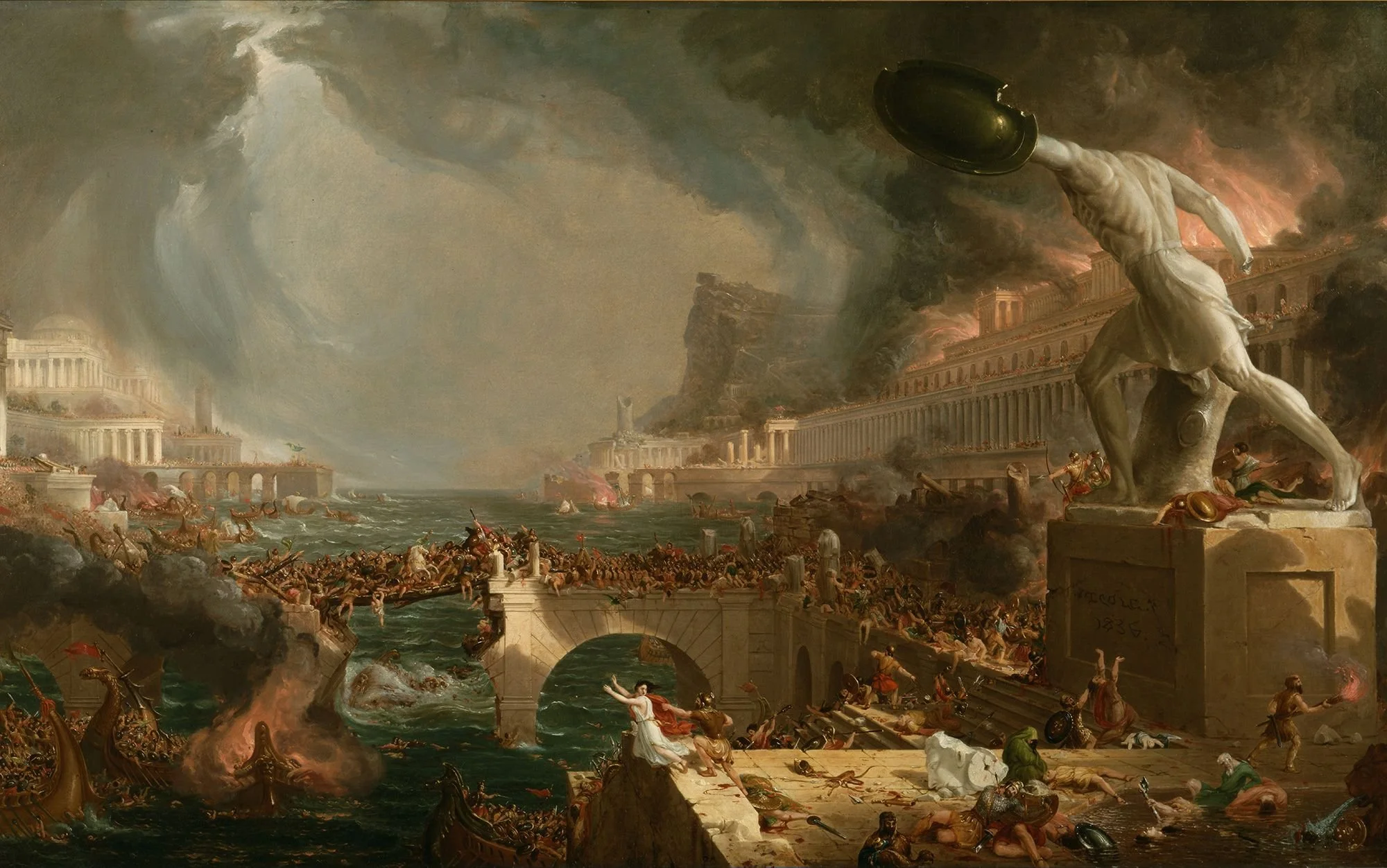
In a recent book titled, The Fall of Republics, A History from Ancient Carthage to the American Constitution, St Louis University Professor Thomas Madden examines the fall of what he refers to as the mixed government republics of Sparta, Carthage, Venice, and of course, the Roman empire. Carthage was destroyed, Sparta was absorbed. Venice slid into the hands of Napoleon. Madden points out that Rome was different. It ultimately tore itself to pieces by way of, among other things, its size, wealth inequality, and moral decay. What strikes me about Madden’s description of the fall of Rome is the disturbing similarity to the state of our current American body politic. It seems the lessons of history are right there in black and white. We can learn from them or we ignore them at our own peril. The words of Abraham Lincoln still resonate:
“At what point, then, is the approach of danger to be expected? I answer, if it ever reaches us, it must spring up amongst us; it cannot come from abroad. If destruction be our lot, we must ourselves be its author and finisher. As a nation of freemen, we must live though all time, or die by suicide.”
Then there was Edward W. Montagu’s examination of Rome in his 1789 Reflections on the Rise and Fall of the Ancient Republics, “the corruption of their manners and the natural effect of foreign luxury, introduced and supported by foreign wealth.” Or Humorist Walt Kelly and his cartoon character, Pogo, who put it much more plainly. “We have met the enemy and he is us.”
American history is complicated and complex. It is chock full of corollaries and contradictions. Our republic is imperfect and young. It is unique among the governments of history and in many ways, can be successfully argued to be exceptional. Like those republics examined in Madden’s book, it’s a mixed government republic but it is also very different in many ways. A deep dive into our history illustrates that we have fallen down and we have stood back up. We have approached the edge and we have pulled back. We have stared into the abyss more than once and we have survived. We are, as Hemingway said, “stronger at the broken places.”
The healing of the fracture of our American virtue is possible if we give ourselves permission to be genuinely honest with ourselves and willing to face the darker side of our American story. If we could find a way to do that with clarity, humility, and intention, then and only then, can we proudly hoist our flag, celebrate our national excellence, and lay rightful claim to being truly exceptional. Courageously facing our historical truth, seeing and hearing both sides of our national story, and being willing to listen to our fellow Americans even when we strongly disagree, will make us stronger as a nation and perhaps begin to heal the fracture of our virtue.
Let The Conversation Begin