Farewell Dolly
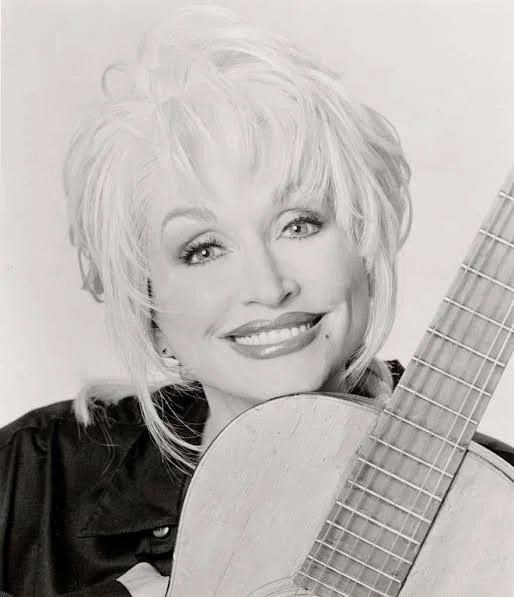
Dolly Parton left us on August 25, 2026. She was 80 years old. There was a day or two of celebration as we remembered her and her music but then the news cycle pretty much moved on. I’m betting most people who weren’t her big fans were surprised at the story of her life and her many good works and the people she helped. I was one of those. No need for a long list of her generosity. A Google search can do that better than I can. Just some of her musical accomplishments and how she lifted others up will come later in this essay.
I still think about her though, and that surprises me a bit too. I wasn’t much of a fan of her music. Growing up with the likes of Dylan, Clapton, and Hendrix, it was hard to look to any other artist. During those years, my friends and I thought of Dolly Parton as somewhat of a caricature of all country music singers. Much has changed since then. I’m older now, a bit wiser too, I think. Too often it seems we only learn of someone’s story after they die. Dolly’s life story really surprised me but more importantly, and for the purposes of these essays on the fracturing of American virtue, I realized that she was much more than just a singer. She became a bone fide American hero and I believe she came to represent a cross section of good and decent Americans who make up our cities, farms, and small towns. The purpose of this essay is to explain why I believe that’s true.
Growing up, we all heard about the American Dream. We learned that America was exceptional, somehow different and better than any other nation on earth. As we grew older we learned there were cracks in that façade, that among the prideful elements in our national history and there are many, there was also ugliness that we needed to face ultimately leading us (if we were honest) to realize that like every other nation, we were not perfect.
These days, when many immigrants arrive in America and are asked why they came, they usually answer with one word: opportunity. They’ll say that in America, there are no limitations to your dreams and aspirations. There are no barriers related to birth, class, or origin. Amidst the acrimony of today’s politics and culture, it’s easy to question whether that still remains true or at least available to all and not just to those with money and means. Then, as is so often the case in American history, the clouds part and the sun breaks through. Winston Churchill was more cynical when he said, “Americans can always be counted on to do the right thing after they have exhausted all other possibilities.” That may or may not be true but when that sun does break through, we can again feel the warmth of knowing that there is a great deal of good in this country and its worth fighting for.
Dolly Parton is one of those stories. Born into poverty in rural Tennessee, Parton had every reason to believe that the American Dream was a lie. Instead, she decided to write her first song at age 6, performed regularly on television by age 10, made her first recording a year later, and became a professional songwriter at 16. After writing songs for others, she released her debut album, Hello, I'm Dolly in 1967, starting her nearly 60-year career. Parton released 49 studio albums and wrote more than 3,000 songs including "I Will Always Love You" – a two-time U.S. country chart-topper and an international success for Whitney Houston that became the best-selling single by a woman. After that came "Jolene,” "Coat of Many Colors,” and the Billboard Hot 100 number-one single, "9 to 5.” She also recorded the Billboard Hot 100 number one single "Islands in the Stream,” a duet with Kenny Rogers. Her final solo studio album, Rockstar (2023), became her highest-charting album on the Billboard 200, reaching number 3. To say she was a musical phenomenon would be an gross understatement.
Dolly could have rested on her laurels, celebrated her enormous popularity and wealth, and never looked back. Instead, what she did as a member of the national American family and how she lived her life was rooted in the greater American virtues of kindness and generosity. Her life provided evidence that she agreed with the words of Rose Kennedy who is said to have admonished her children, “Much has been given you. Much is expected of you”
In that spirit Dolly gave much more than her fair share. In 1995 she founded the Imagination Library in to honor her illiterate father. In addition, she gifted over 300 million free books to children from birth to age 5 worldwide, donated $1 million to Vanderbilt University Medical Center, which helped fund the early research behind the Moderna COVID-19 vaccine, and gave millions to Monroe Carell Jr. Children's Hospital at Vanderbilt, She also helped raise funds to build LeConte Medical Center in her native Sevier County, Tennessee.
In December 2006, Parton pledged $500,000 toward a proposed $90 million hospital and cancer center to be constructed in Sevierville, in the name of Robert F. Thomas, the physician who delivered her. She announced a benefit concert to raise additional funds for the project. That concert played to about 8,000 people.
For disaster relief, she established the My People Fund in 2016, giving $1,000 a month to families who lost their homes in the East Tennessee wildfires along with donating $2 million ($1 million personal and $1 million business funds) for relief efforts following Hurricane Helene. These are just part of the list.
If we all in our own way considered how we might mimic her generosity in our own lives, even in the smallest of ways, we could begin the repair of our national virtue. Throughout my life, I also heard often that America was the most generous country in the world. Despite the DOGE effort to eliminate programs like USAID and other humanitarian efforts, global statistics from US News and World Report indicate that we still are. The U.S. leads the world in total private philanthropic dollars, with Americans giving hundreds of billions of dollars annually. The Charities Aid Foundation has historically placed the U.S. near the very top. In recent reports (such as the 2024 index), the U.S. ranked sixth overall, behind countries like Indonesia and other high-scoring nations. When measured by the share of personal income donated rather than raw dollar amounts, the U.S. places closer to the middle of global rankings (averaging under 1% of income), with other nations like Nigeria ranking higher in percentage terms. Americans score very high in specific categories tracked globally, with roughly 72% to 76% reporting that they help strangers with over 39% reporting regular volunteer work. Even with that prideful record, each of us can consider what we, as individuals, can do.
As a young Catholic school students, I was taught the parable of the Good Samaritan. It is one of the few things that I still remember from those years. It’s the story of a man walking from Jerusalem to Jericho who, along the way, was beaten, robbed, and left for dead on the side of the road. Many walked by and did nothing. One man, a Samaritan, stopped to give aid even carrying the man to the next town for medical care. The part that the good Sisters left out of our lesson was what Jesus said after sharing the parable with his followers. He asked them, “who was this man’s true neighbor?” He then said to them. “Now… go and do likewise.”
In his recently published memoir, Kentucky Governor Andy Beshear told a story of his recent visit to a flood ravaged community. When he approached a woman cleaning mud and water out of a home, he praised her and said he was sorry for the damage to her home. She looked up at him and said, “Oh, this isn’t my home. I live over there.” pointing to a house across the street. Then she added, “I wanted to help my neighbor first.”
One last story, one of personal experience that perhaps began my own conversion to a more generous life, happened right after I received my PhD from Loyola University in Chicago. After the ceremony, my wife and our 4 kids, in our big old conversion van, were heading down Sheridan Road just south of Northwestern University when we spotted 3 college kids and their broken down car. Having some background in auto mechanics, I pulled over and asked if I could help. In the end, we couldn’t get it started. I was still pretty pumped though after receiving my doctorate so I looked at them and asked, ”How far to your dorm?” One of them answered, “about a mile and a half.” I hesitated for a moment, looked around, and replied, “Ok, how about we push this bad boy?” Then I heard, “Are you kidding man, that’s too far!” I replied, “No, it’s not, let’s go! Put your backs into it.” So we did, all the way back to their dorm. They were very grateful and I think, just a little proud of themselves. When I climbed back into the van, one of my children asked me, “Why did you do that Daddy?” I didn’t have a good answer. I just said that it needed to be done.
A few weeks later we were preparing to leave for a long drive to Disneyworld. I had gone to Walmart to get a few last minute things and when I returned home, I discovered that I had lost my wallet. Needless to say, I was mortified. That’s when the doorbell rang. It was a man and his young son. The man said his son found the wallet under a car and insisted that we return it. I thanked him and he went on his way. By that time, all the kids were looking through the storm door glass. They had seen and heard it all. That little boy saved our trip. When I came back inside, I said to them, “Do you remember that night when I pushed that car and you asked me why I did it?” They all nodded. Then I pointed to the man and his son as they walked away and said, “That’s why I did it.” Their eyes couldn’t have been any bigger. That afternoon, the kindness of a little boy reminded me of the power of good deeds.
As we watch the aberration that is our current politics and wonder if everyone has abandoned any sense of virtue and goodness, the answer is no, they haven’t. People like that neighbor in the flood, the man and his son, and people like Dolly Parton, represent the very best of us. These are the role models after which we all can pattern our own lives.
One by one, each of us in our own way, can begin to repair the fracturing of our national virtue. We can put our neighbor first. We can “go and do likewise.” We can be like that father and his little boy. We can be more like Dolly.
We can’t do everything but we can do what we can with the time and resources that we have. We can seek out opportunities to lift people up. We can be part of a rising tide that really can lift all boats. We have the opportunity, as a nation and as individuals, as Thomas Paine advised, “to make the world over again.” Dolly Parton knew that. She understood that. She lived it.